sole g
A sneaker customisation platform that makes sustainable choices feel like personal ones.
00
problem
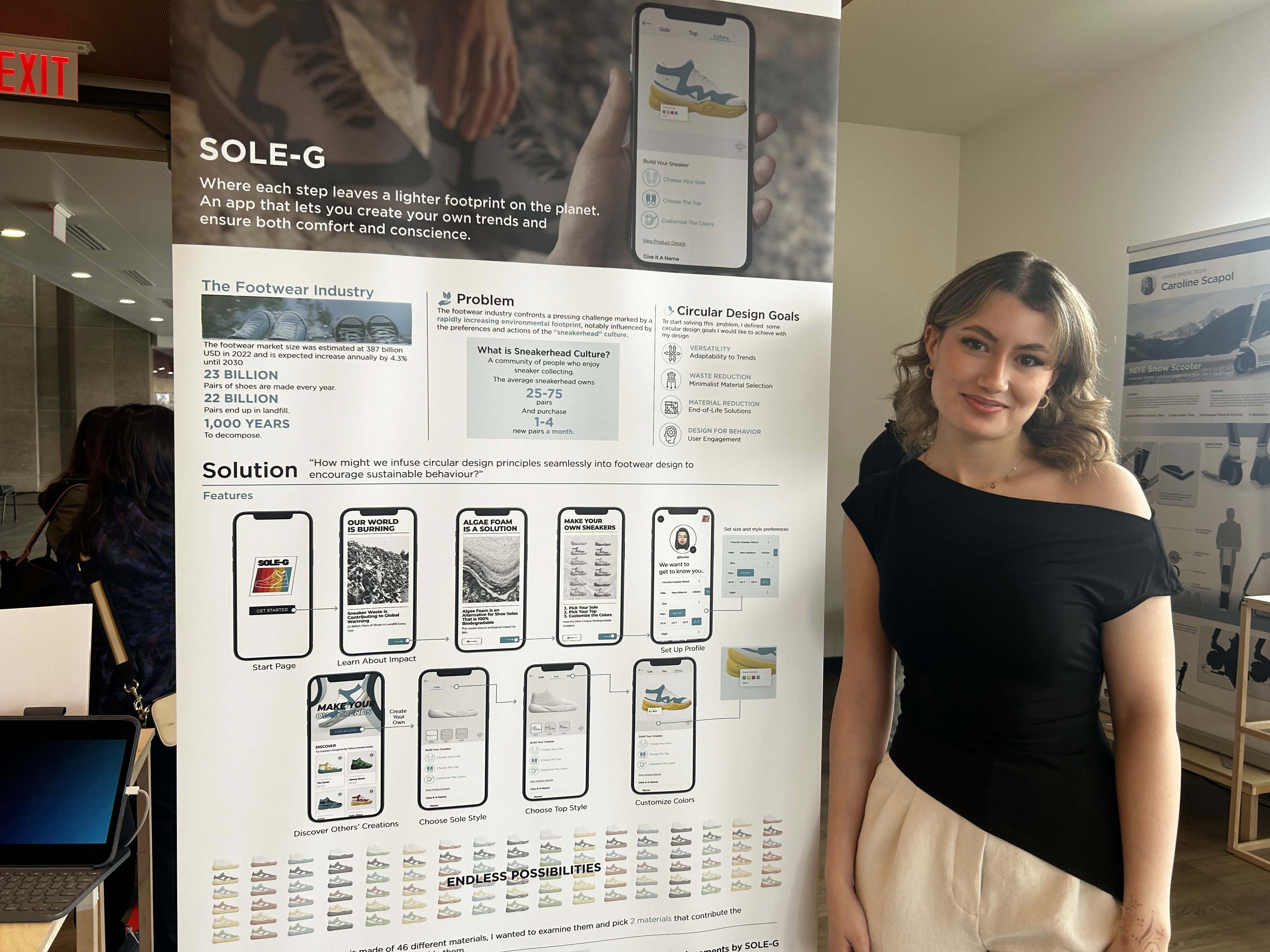
The brief: design a product that follows a circular lifecycle. Something taken from the earth that could, eventually, return to it. Finding the right problem meant looking for products that do the opposite. Footwear kept coming up. The sole specifically, rubber and petroleum-based foam that doesn't break down, doesn't decompose, and sits in landfill for centuries long after the shoe itself is forgotten. The user group that makes this most visible is sneakerheads. A culture built on accumulation. New pairs in, old pairs out, with little thought for what comes next. The problem wasn't just material. It was behavioural. And any solution that ignored that was never going to work.
solution
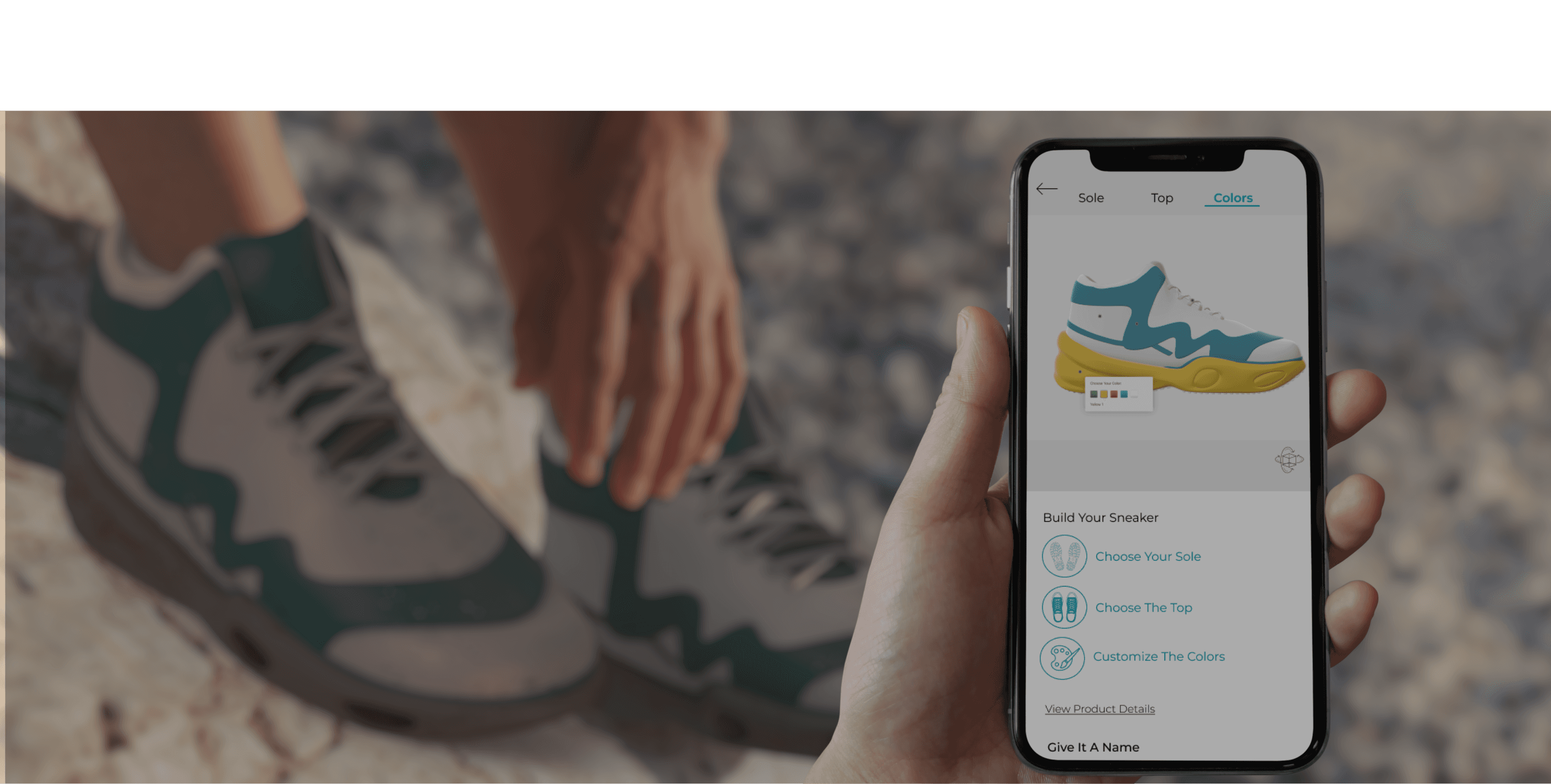
The answer wasn't to build a sustainable sneaker brand. It was to meet sneakerhead culture where it already lives, in the details, the drops, the sense of ownership. I designed SOLE-G as a customisation platform built around a simple but considered foundation: a sole made from algae, a renewable material that sidesteps the petroleum-based foams quietly filling landfills. From there, users move through a set of curated design presets, each one a starting point and not a constraint, personalising their shoe within a framework that had sustainability designed into it from the start. The circular principles aren't a disclaimer at checkout. They're the product. Every preset, every material choice, every interaction was shaped through ethnographic research inside real sneakerhead communities, iterative prototyping, and usability testing, making sure the experience felt like self-expression first, and responsibility second.
Research
Understanding the problem meant understanding it from two directions: the material reality of what goes into a shoe, and the cultural reality of who buys them.
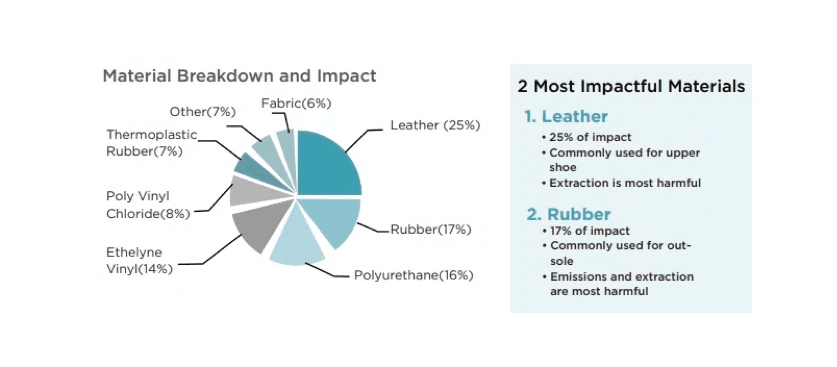
Secondary research into sole construction revealed what makes the problem so stubborn. Most soles are petroleum-based composites, layers of EVA foam, rubber, and synthetic compounds that are bonded together in ways that make separation (and therefore recycling) nearly impossible. They're cheap to produce, durable in wear, and permanent in landfill. The industry has known this for years. What it hasn't solved is the replacement.
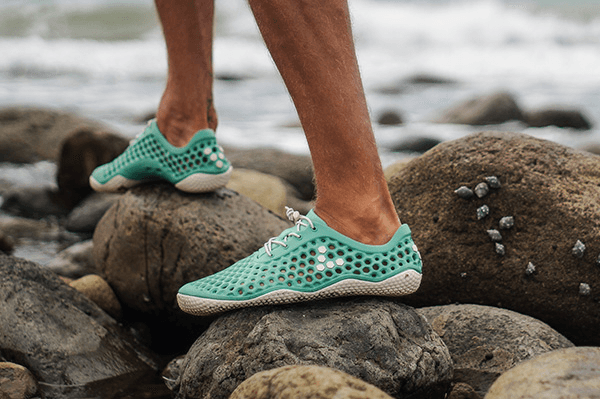
One exception stood out. A company producing soles made from algae - a rapidly renewable material harvested from water systems where overgrowth is itself an environmental problem. The soles are biodegradable, perform comparably to conventional foam, and don't compromise the quality or feel of the shoe. It was proof that a material alternative existed. The question was whether anyone in the target culture would care.
That's where the ethnography came in. To understand how sneakerheads actually behave, not how they describe themselves, but how they move. I conducted an online ethnography inside communities where this culture lives: forums, comment sections, haul videos, styling threads. What emerged wasn't a portrait of careless consumption. It was something more specific. These were people who paid close attention to materials, construction, colourways, and provenance. They weren't indifferent to quality. They were defined by it.
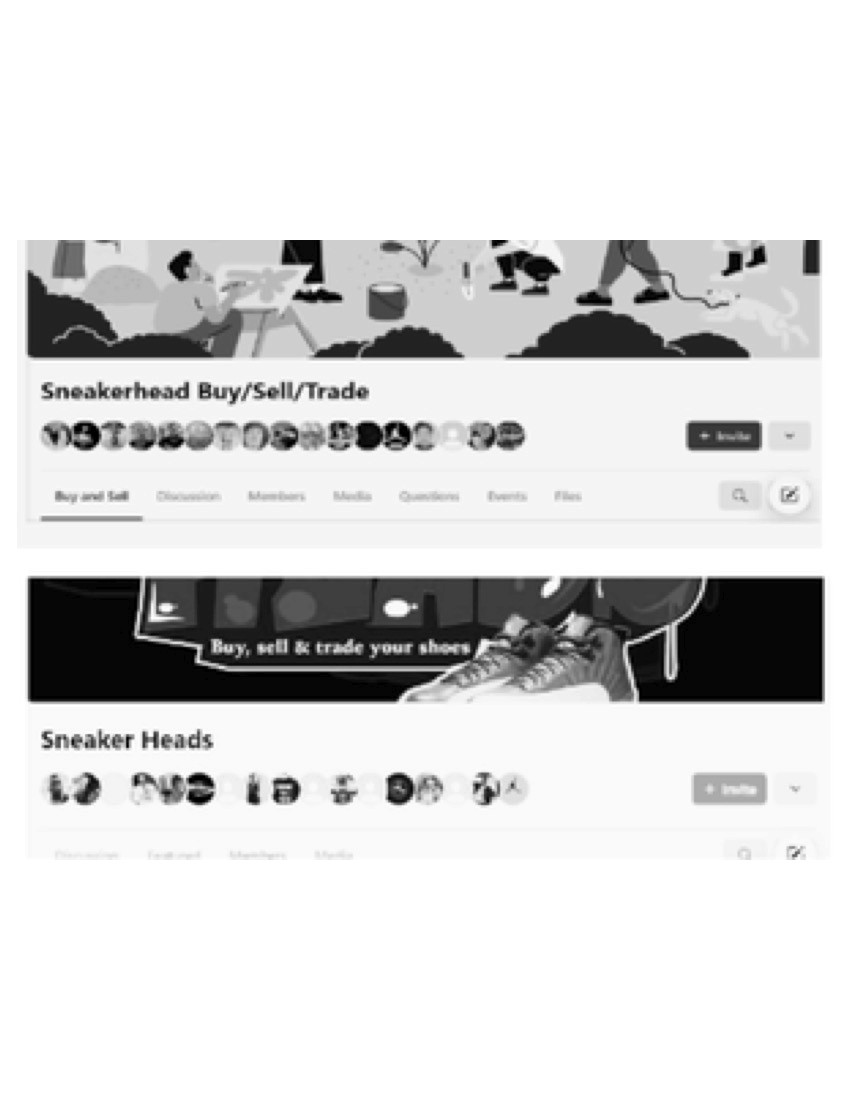
But the sustainable options already on the market weren't speaking this language. They were generic in design, cautious in identity, and built around a logic of restraint that ran directly against what sneakerhead culture values: self-expression, distinctiveness, the feeling that your shoes say something about you. Sustainable sneakers, as they existed, asked users to trade their aesthetic identity for a clear conscience. Most weren't willing to make that deal.
The ethnography also surfaced something the secondary research couldn't: the deeply social dimension of this culture. Shoes aren't just worn, they're shared, discussed, photographed, and styled. Finding a pair, pairing it with an outfit, documenting it for others — these are rituals with real meaning. Any design that ignored this social layer was a design that misunderstood the user entirely.
The research didn't just inform the direction. It became the brief.
Ideation
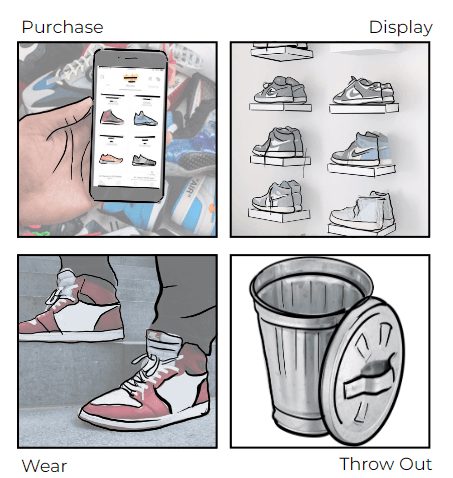
The research made one thing clear: a sustainable shoe alone wasn't enough. A better material sitting inside a product that still felt like a compromise wasn't going to move anyone. The solution needed to do two things at once, close the loop on the lifecycle, and give users something they'd actually want.
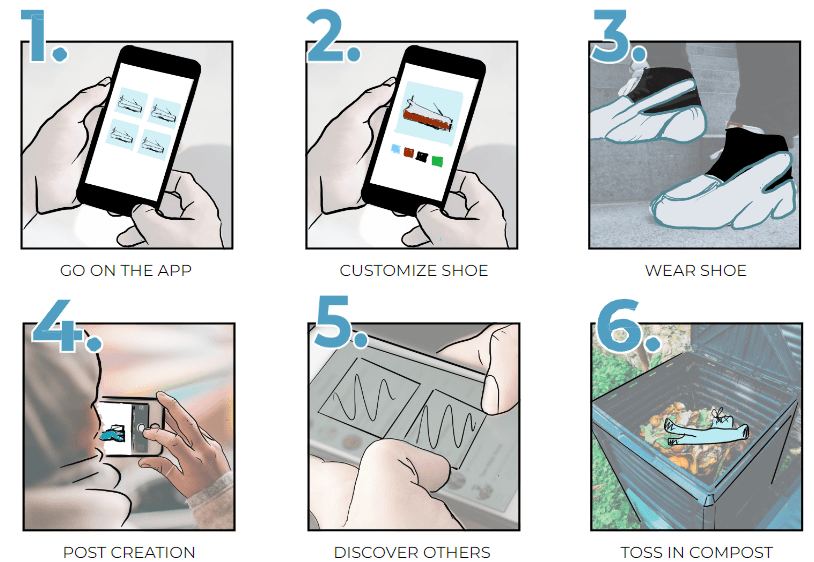
That meant designing both the shoe and the experience around it. SOLE-G became a customisation platform built on a circular foundation: a shoe constructed with an algae-based sole, paired with an application that lets users design their own pair from the ground up. Sustainability as the structure. Self-expression as the surface.
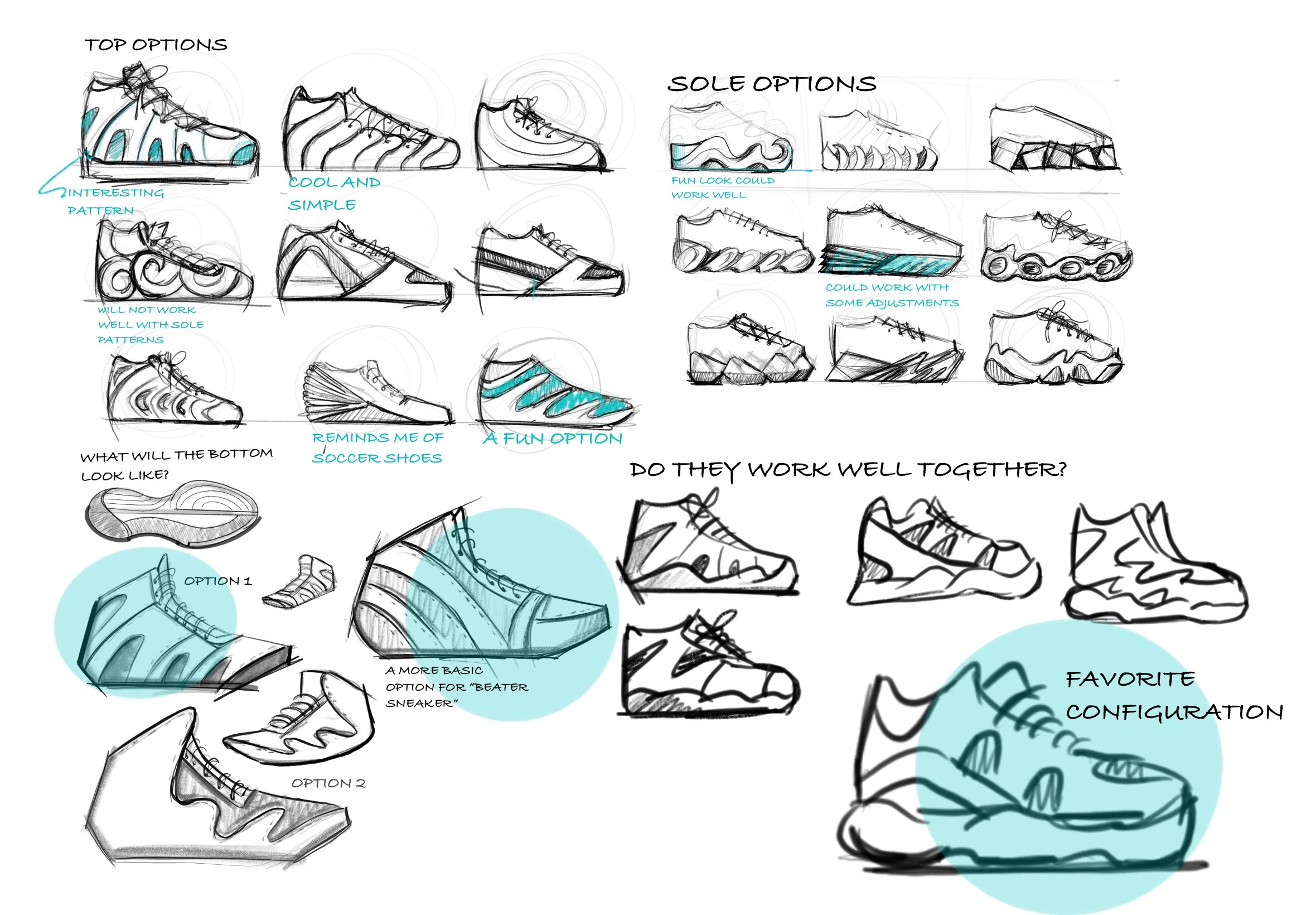
Ideation started with the physical. Breaking the shoe into its component parts (soles, uppers, overlays) and designing a range of presets for each. Variations that could be mixed, layered, and owned. The goal was a system with enough range to feel genuinely personal, and enough constraint to keep every combination coherent.
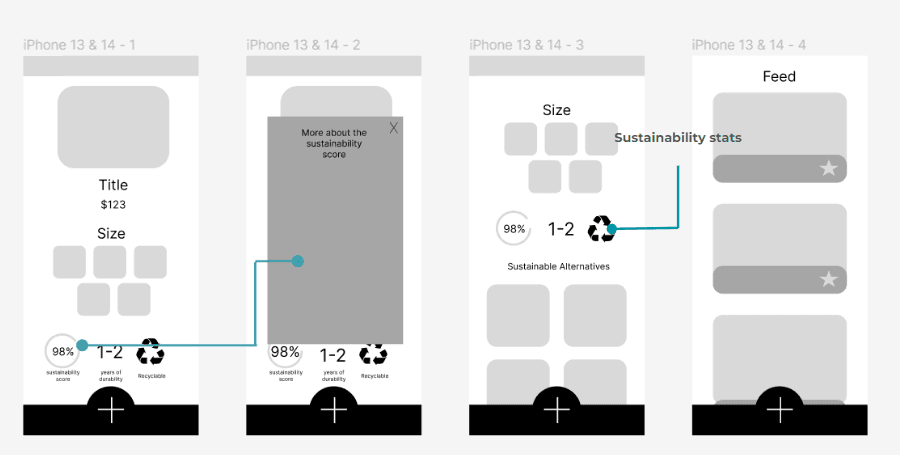
Wireframes followed, translating that logic into an interface. How a user moves through choices, builds a design, and sees it come together in real time. Early flows were rough by intention, the priority was testing the structure before refining the surface.
User Testing
Preliminary design
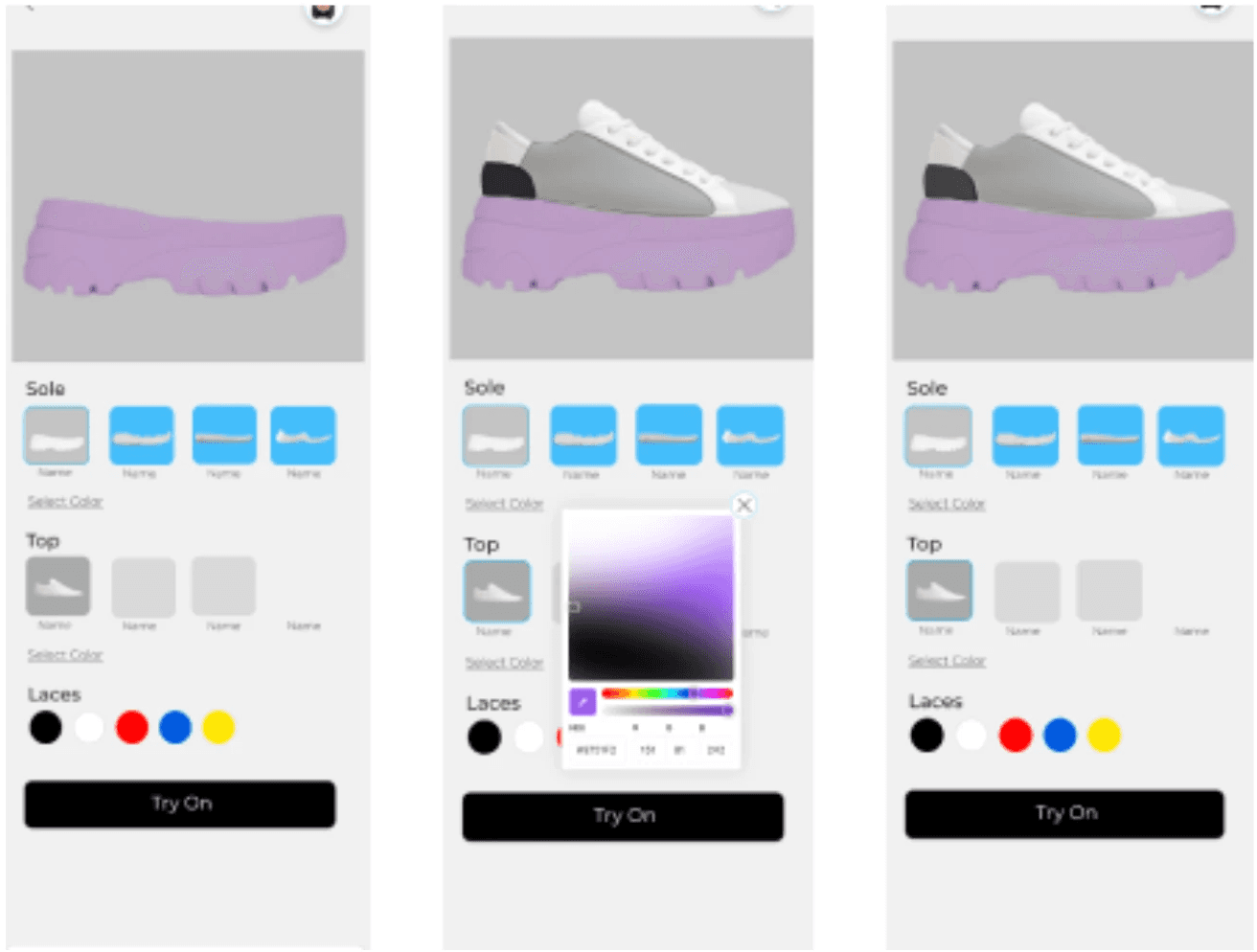
Putting the prototype in front of real users changed things. What made sense in design didn't always hold up in practice, and the testing sessions were direct about where the gaps were.
Two pain points came up consistently:
The colour wheel created choice paralysis. Rather than feeling like freedom, an open colour picker became a source of friction. Most users couldn't land on the colour they had in mind, and the open-ended nature of the tool made the decision feel harder, not easier. What they actually wanted was a curated set of colours to choose from.
The 2D shoe preview wasn't enough. A flat image of the shoe gave users an incomplete picture of what they were designing. Without a fuller view, they couldn't properly evaluate their choices or feel confident in the result.
Both findings pointed in the same direction: users didn't want less control, they wanted better guardrails. The iteration that followed replaced the colour wheel with a set of preselected colour options, and pushed toward a richer visual representation of the shoe throughout the customisation experience.
Final Design
The fixes were direct. Both pain points had clear solutions, and the next version implemented them.
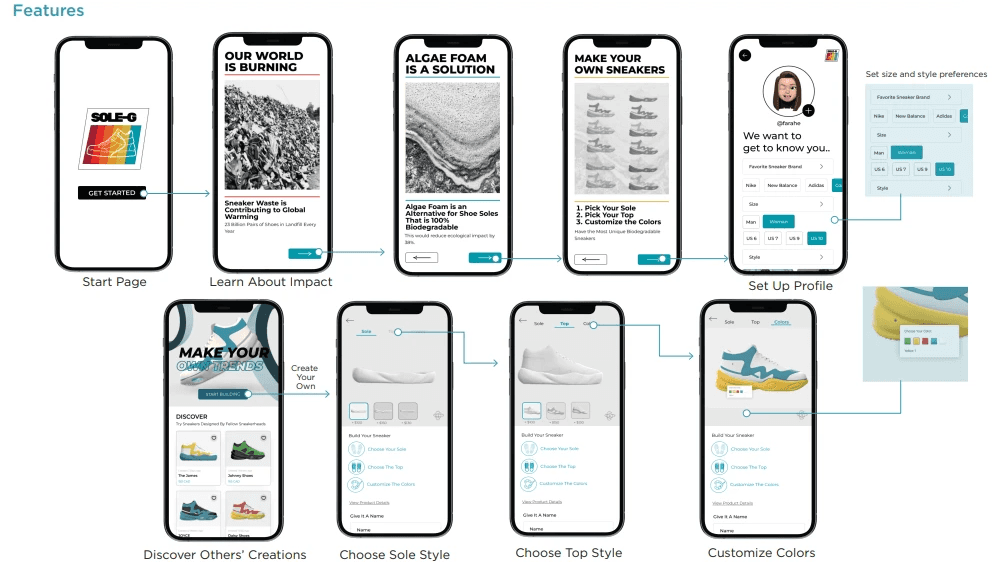
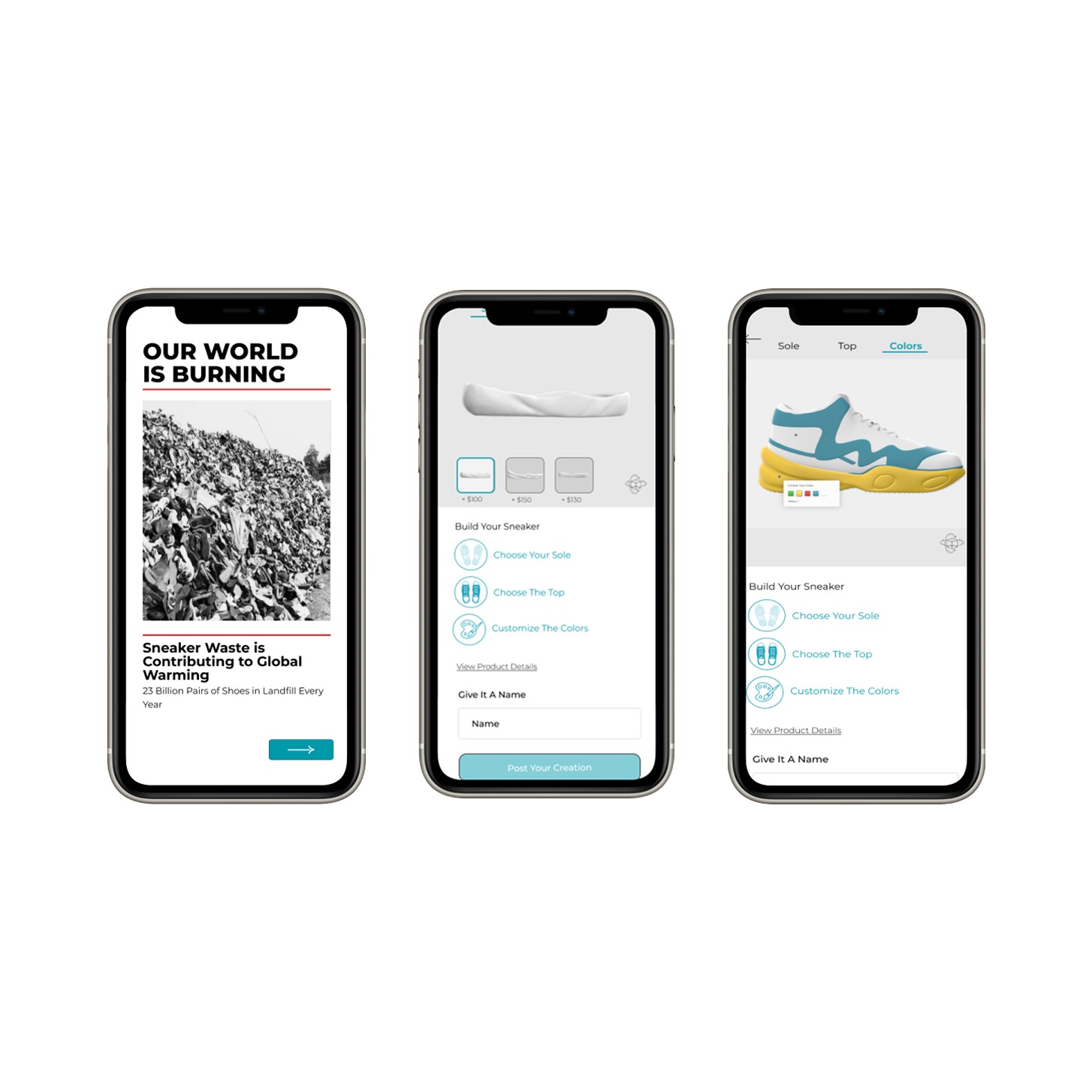
The colour wheel was replaced with a curated palette, preselected options that gave users enough range to express themselves without the paralysis of infinite choice. The decision felt smaller on screen and faster in practice.
The bigger shift was the shoe preview. The 2D image was replaced with a fully interactive 3D model, bringing the customisation experience to life in a way the flat render never could. Users can now rotate the shoe, view it from every angle, and see exactly how their choices land on the physical form.
The result was an interface that finally matched the ambition of the concept. Not just a tool for making choices, but an experience that made those choices feel real.
Physical Prototype
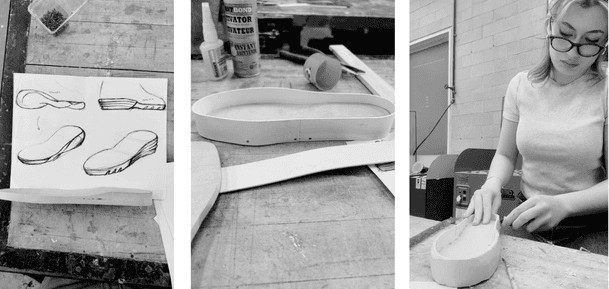
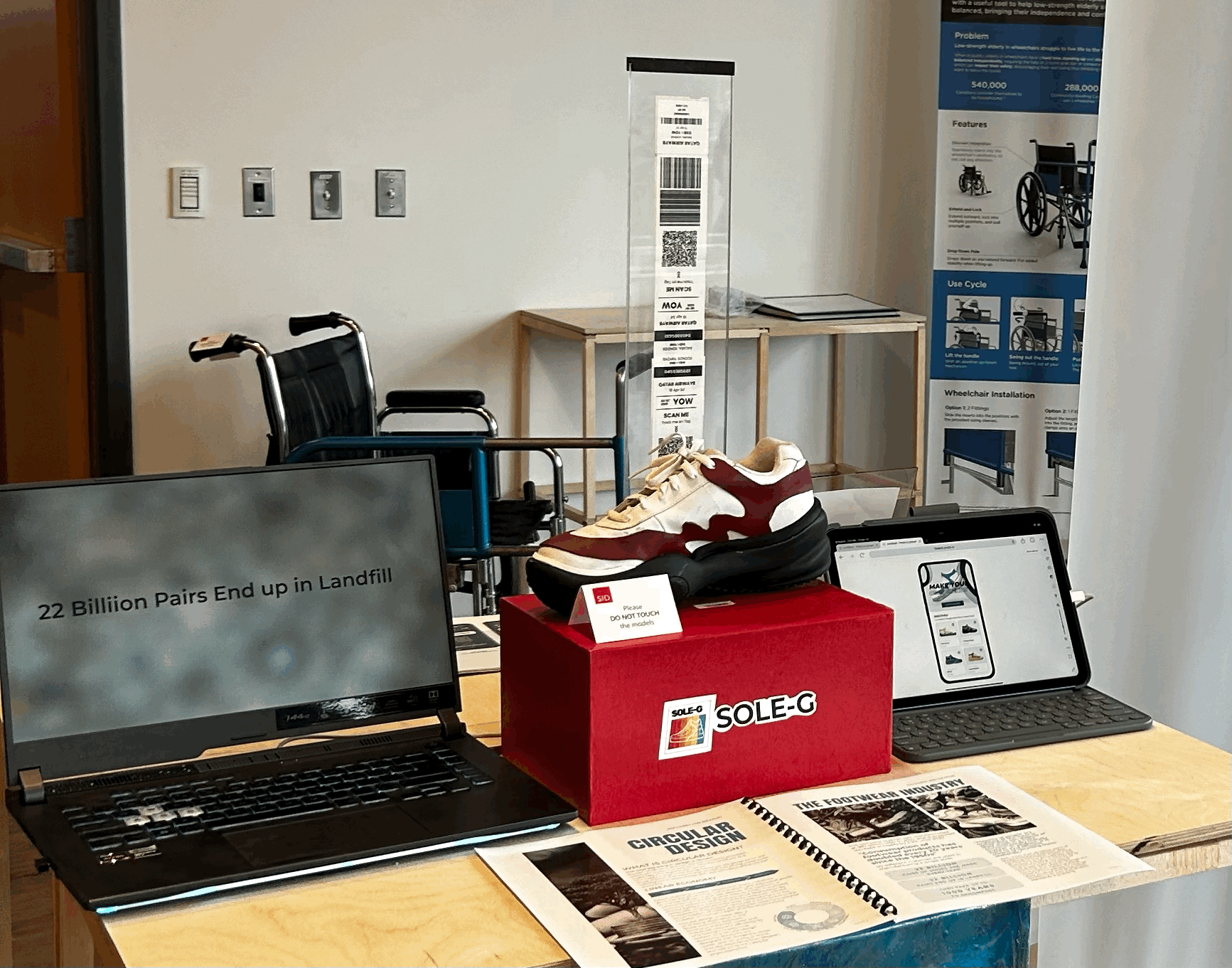
The work didn't stay on screen. A physical prototype of the shoe was built alongside the digital iteration, making the concept tangible, and grounding the design decisions in something real that could be held, examined, and tested beyond the interface.
year
2025
timeframe
24 weeks
tools
Figma, Keyshot, Blender, Photoshop
category
UI/UX
01
02